




BEGIN YOUR ADHD ASSESSMENT
Register & Schedule Your Consultation Today
Our psychiatric ADHD assessment provides
clear clinical guidance to help you understand your next steps.
Our psychiatric ADHD assessment provides clear clinical guidance to help you understand your next steps.
What to Expect
Booking an assessment helps us gather the information needed to understand your symptoms and overall history. To support you in preparing, here is an overview of what the process involves.
Please note, our services are available to patients aged 17 and above. Patients who are 17 must be accompanied by a parent or guardian.
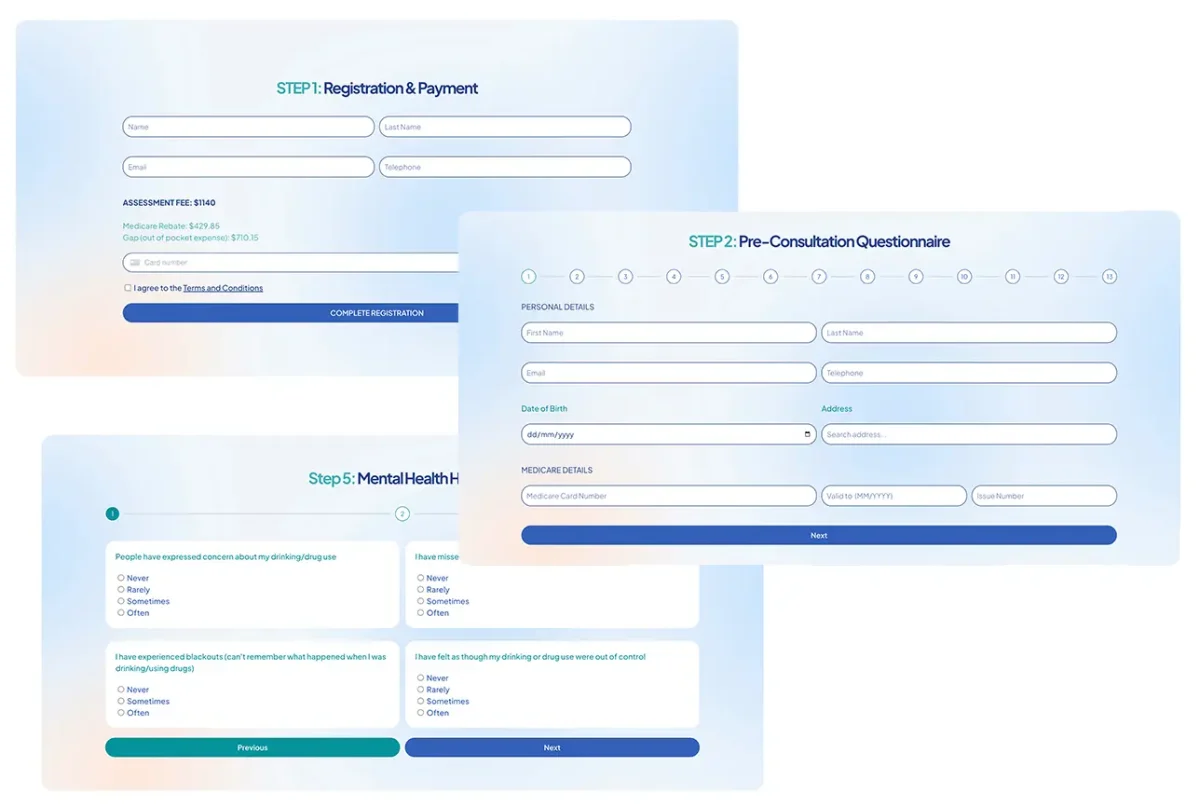
- After registering, you will be asked to complete several multiple-choice questionnaires to help your psychiatrist understand how your symptoms appear across different situations and how they may be affecting your daily life.
- Childhood History: This questionnaire is designed for someone who observed you during your childhood, such as a parent, guardian, or close relative.
- Please allocate around 20 minutes of undisturbed time to complete this process. Your thoughtful and honest responses are crucial for an accurate assessment.
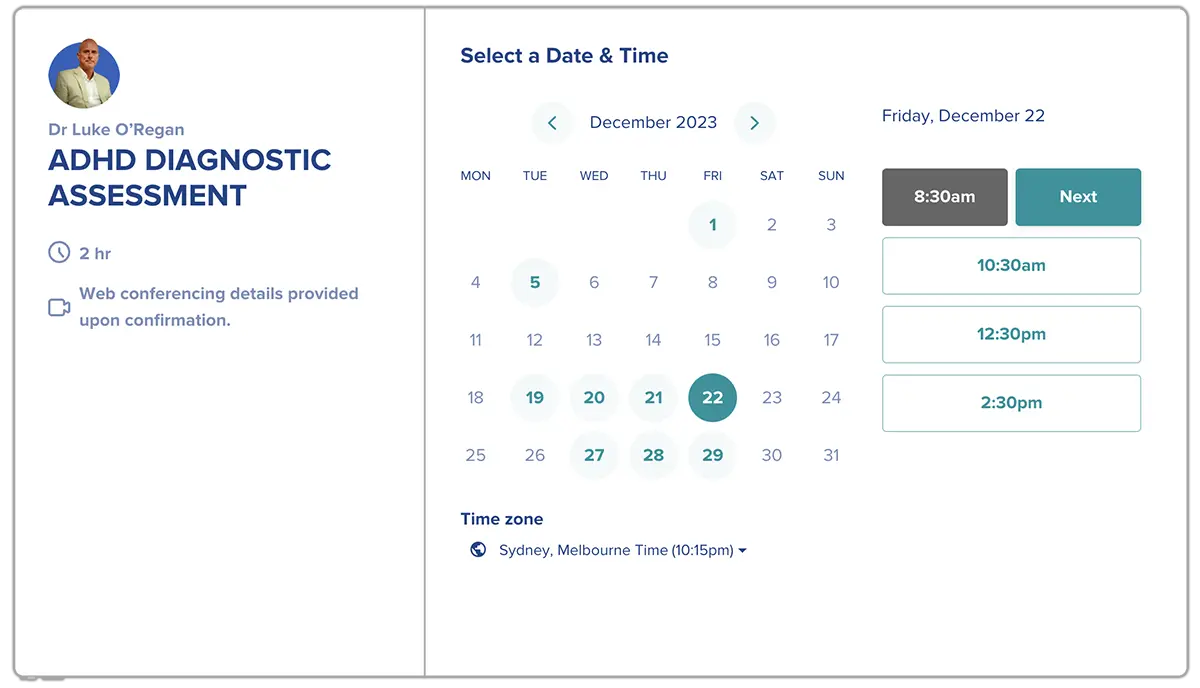
Confirm Appointment
You’re close to completing your booking. This step finalises the details of your scheduled consultation.
- Upon confirmation, you'll receive an email with all essential details, including any links for virtual consultations and additional instructions.
- Our team aims to make the process clear and well-supported so you can approach your assessment with confidence and understanding.
Preparing for Your Assessment
GP Referral
A GP referral is needed for Medicare rebates. After your assessment, your psychiatrist provides a clinical report to your GP and may initiate treatment if appropriate. Ongoing care is usually managed in shared care with your GP.
Childhood Observer
Where possible we require a short questionnaire to be completed by someone who has observed you as a child before the age of 12. This can be a parent, guardian, sibling, teacher or another person familiar with your early development.
Quiet Environment
A peaceful environment can help you concentrate during your consultation and support more natural, accurate responses. Minimising distractions also ensures your clinician receives clear information during your assessment.